
How Australia’s newest basketball pathway is taking shape with the AUBL
Get ready, Australia – college basketball could soon be on your doorstep.

No, the NCAA isn’t making a move down under, at least not any time soon.
Instead, a new league is heading our way, one that aims to combine the passion for college hoops seen in America with the growing love for basketball in Asia, and that is hoping to transform the talent pipeline in the region.
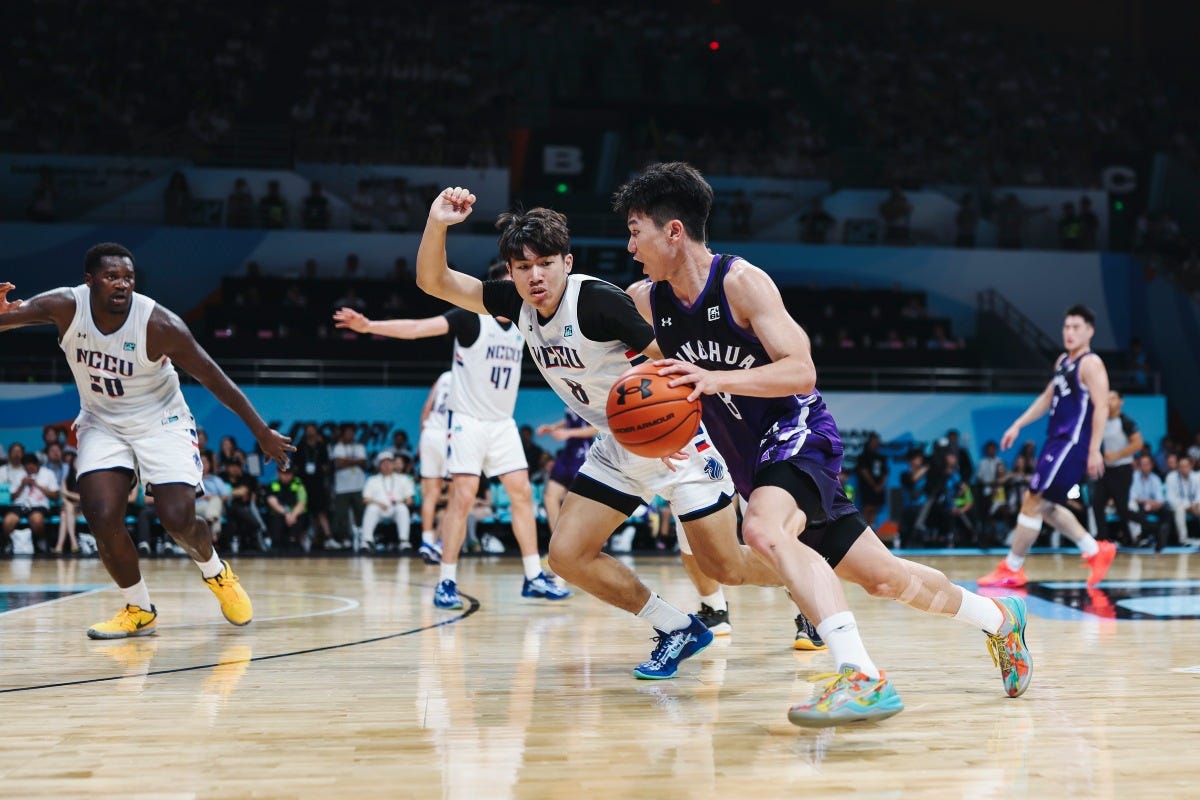
The Asian University Basketball League (AUBL) tipped off last year, bringing together 12 of the biggest universities from across the continent for a week-long tournament in Hangzhou, China. This year, they’ll do the same again, with the second edition of the event running from August 2-9, but with plenty of change to boot; while defending champions National Chengchi University are one of six teams to return, six new universities will enter the fold, including Australia’s own University of Sydney.
“New markets are going to add a different style of play and a different kind of atmosphere, which we’re really excited about,” Greg Stolt, Senior Vice President of Basketball Operations at AUBL, told The Pick and Roll’s Unwrapped Podcast recently.

That shuffling of teams isn’t the only change on the horizon, with the league also preparing for an extended season with home and away games in the near future. With Australia now in the fold, that means there could be AUBL action on our shores as soon as October, giving Aussie hoops fans a new outlet and providing a huge opportunity for emerging players and coaches alike.
While Australia’s University Basketball League has steadily grown since its inception in 2021, it exists off to the side of the traditional pathways in the sport – local clubs feed state programs, which develop talent for the pro game and national teams. The AUBL aren’t shying away from the fact that they’re looking to shake up Australia’s basketball norm; in fact, they’re embracing the opportunity to be the ones to break new ground. “There is a little bit of a ‘this is what we’ve always done’ mentality in the college level in many of these markets, and since we’ve done it the last 50 years let’s continue doing it this way,” Stolt said.

Credit: AUBL
“From a basketball perspective and for the top league’s perspective, enhancing the college level, and obviously down to the high school level and to the grassroots, is only going to make your pro level better.”
“The goal and objective for us is to create a relevant, meaningful league, but it is going to benefit everybody – players, coaches, professional leagues, national teams.”
While university sports are a little more established in some of the league’s other markets across Asia, last year’s tournament was still a big leap. China’s sports academies, for example, have traditionally fed right into their professional ranks, but more and more young players are starting to look elsewhere for opportunities. “Now you see a little bit of a shift in the market, and really top talent in high school is considering going to college basketball instead of becoming pros at a younger age,” Stolt said.
That inaugural AUBL event was the first step to giving those players a high-level college option closer to home. “Basically what we want to do is take the existing infrastructure and enhance it, make it more meaningful and beneficial for players and coaches and anybody participating,” Stolt said.
By all measures, the tournament was a huge success and a promising start towards that goal. On the court, over half of the 24 total games, including every playoff game, were decided by 10 points or less, with a high standard of play on display night after night. Off the court, the numbers were just as impressive – over 30,000 live attendees, 1.55 billion online impressions, and more than 200 million live broadcast views.
The on-court product is the lifeblood of any sports league, and the AUBL is confident in its ability to put forward a high-quality competition with high-level players. That fan engagement, though, was an even bigger tick in their favour, as they gained immediate cut-through and found fans quickly. “One of the things that I love about China and basketball in China, and I’ve spent about 14 years here, is it doesn’t really matter who’s playing, there’s always an interest in the game and watching the competition,” Stolt said.
They’re hoping that built-in interest in China will again come to the fore during this year’s tournament, but that alone won’t be enough once they spread further abroad in their first full season. It’s another built-in group of fans that they’ll be hoping to tap into, one that is unique to college sports and has long fuelled the passion seen in the NCAA. “These are all major universities in the region and globally, they have alumni everywhere… ultimately, the connection and access to the alumni base and the fanbase is a big piece, and it’s a little bit different than pro sports,” Stolt said.
“That’s the beauty of college sports, it’s the pageantry and passion of the fanbase and the alumni base. Whether or not it’s the best basketball or not, that’s irrelevant – it’s this is our program, they’re representing us, we want to support them, and we’re going to be there for them.”
In markets like Korea and the Philippines, where the game has huge popularity but the national leagues sit below the likes of Australia’s own NBL and Japan’s B.League, that college connection could provide a real point of difference. Fans there watch the NBA, sure, but it’s hard to create a genuine connection from afar, as Stolt well knows after 12 years working for the NBA in China. “Now I’m in this new world of creating a product that’s based here in Asia,” he said, “and it’s going to be for the people here that can watch it in real time, with every year having teams and players that they can support.”
Credit: AUBL
That connection won’t truly be complete, of course, until teams are playing games on their own home turf. The same goes for the AUBL as a whole – while a week-long tournament each year is a start, they know it’s not enough to fulfil the potential they see for the league, both on and off the court. “We really felt like to create something meaningful for basketball it needs to go on more consistent throughout the year… for us to really build this and make it important for basketball and create a business out of it, it needed to be bigger and a little bit more over a period of time,” Stolt said.
While exact details will be announced following August’s event, the blueprint is in place for what that will look like. Tipping off in October, teams will travel across the region in a full regular season, aiming to qualify for championship finals in April 2027. Just as six new teams have entered the fold for the second tournament, Stolt says the lineup of universities could still change before October’s tipoff – “we think it’s really important to have the most compelling basketball teams out there, so that’s the first goal for us” – but with Australia now a part of the league through the University of Sydney, it seems like a safe bet that games will be heading down under.
Having previously played professionally in Australia, including a stint under current JackJumpers assistant coach Mark Radford in Burnie, Stolt knows the potential that is here. “I know a lot about Australian basketball from my playing time and of course watching the great players that have come out of the system, so we’re really excited about having [the University of Sydney] as part of this and really helping us grow the platform,” he said.
He also knows what the current basketball landscape in the country looks like, with the NBL and the NCAA fighting for the top young talent. The AUBL isn’t looking to upend or compete directly with either, but rather give even more opportunities to more people across the whole basketball pipeline. The end goal is to help everyone, from top to bottom – more players will have a high-level competition to compete in, more coaches will have jobs and chances to develop, more fans will be able to access games, and more money will come into the sport.
“I think ultimately the more funding that goes into sports, it’s going to help grow basketball, make it a better experience for those players, staff, and people involved in it,” Stolt said.
“Instead of having a coach that’s working part-time because he can’t earn enough as a coach, you hire a full-time coach, you hire a full-time staff, you’re building your facilities, you travel more often to get high-level competition.”
Long-term, the league is open to any and all ideas. Could the number of teams be expanded? Could a women’s division be introduced? What do broadcast rights look like if their brand continues to grow? For now, though, the focus is on putting on the best show that they can over the next year and showing it to as many people as possible. Big crowds are expected in Hangzhou once again, games will be live streamed into all participating countries, including Australia, and there’s plenty of reason to be excited about the action on the court.
“I think year one was explaining to people what we were doing, and the challenge was we hadn’t done anything yet, but now we did something,” Stolt said. “The ones that experienced it saw how good it was and how good it can become, and so for us the really exciting part is we’re just getting started.”