
From rural Tasmania to Taiwan: Phoenix Robey is not taking the usual route
Whether it's as the first kid to set foot on Antarctica, getting a 99.95 ATAR or being Taiwanese basketball's Nick Kay, Phoenix Robey has been building his path as it comes.

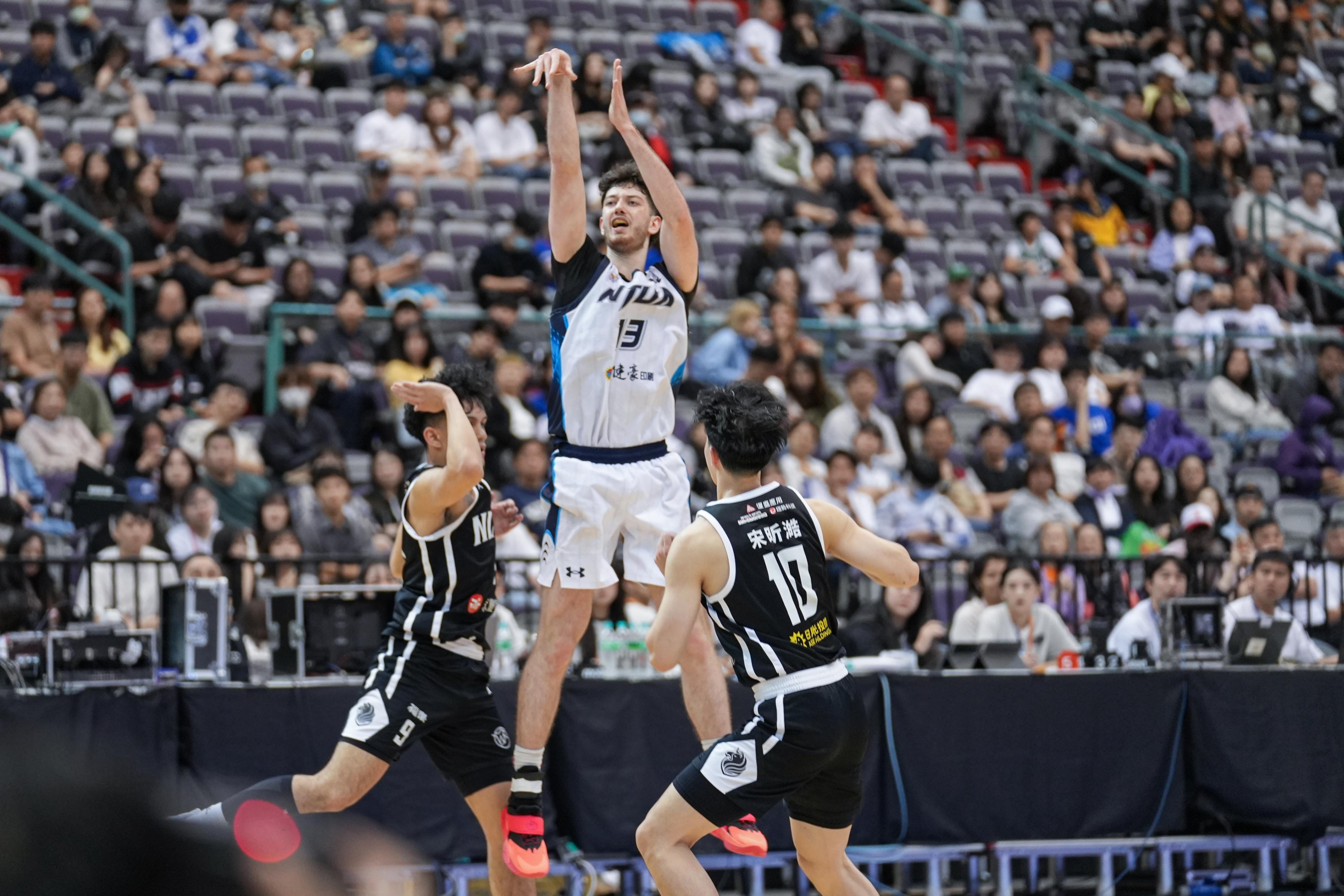
Photo credit: NTUA Basketball
It was a chilly five degrees Celsius on a Tuesday morning, and Phoenix Robey had just finished his skills session. The 6’5 swingman grew up in Tasmania, and he’s back home enjoying the quiet. He spends his offseasons away from the bustle of Taiwan, where he plays for the college NTUA (National Taiwan University of Arts) Sharks.
“[The solace] is so good, it’s just so peaceful,” he said, a few hours after the session. “In Taiwan there’s so much noise. Everyone drives a moped because there’s so many people, so there’s always noise and so many people out. It’s nice to be back in rural Tasmania and just peace and quiet for a bit.”
It’s definitely a contrast, to experience life in a land the same size as his native state, except with a population closer to his home country.
“They’re completely different. I’m in Taipei, in the city. There’s 25 million people in Taiwan, and Taiwan’s around the same size as Tassie. So it’s super densely populated. And especially in Taipei, there’s always noise. So that was a big culture shock for me.
“I live in rural Tasmania where the closest neighbour is, you know, a kilometre away, and I’m on my own farm in my rural property. So going to Taiwan was definitely a big change.”
Robey has been something of an Aussie pioneer in Taiwan and chuckled at the likening to what Nick Kay has been in Japan.
“So I think I might have been the first. There’s been a few other Aussies that have come and gone in my time, maybe three, two or three, but I think I’m the person who’s been there the most and still there.”
He has put together a solid career in Taiwan, with his most recent season his best. He averaged 16.1 points on 50% from the field, 39.3% from deep and shooting nearly as many threes as twos. His three-point shooting took a substantial leap from his first to his second year, from 27.5% to 35.7%. It’s a key strength to his game and a reflection of his own work, as well as the countless hours that come with the territory playing in Taiwan.
“In Taiwan they train a lot more than here. We used to train twice a week, but in Taiwan there’s, you know, three sessions a day sometimes with school, so it’s really full on. And on top of that having to try and learn the language. So you have your school, you have your studies. And then at night I’m trying to open up the language textbook. I think that’s when the academic routine sort of helps.”
The academic routine he’s talking about is something he established in high school as he tried to balance his studies with basketball en route to a 99.95 ATAR.
“It was a big challenge with basketball… trying to balance both of them. So during my last year at high school it was a lot. Trying to play NBL1, trying to play club and then also having exams and stuff. So that was a big struggle. But, you know, time management was a big thing. And yeah, I mean, I’m pretty happy with the result. It was a lot of hard work.”
As full as his days were, he revealed the separate arenas of basketball and academia helped keep the other fresh.
“I definitely think one helped with the other. Basketball just in general, just having, you know, the routines that you make with your study routines, how that helps in basketball and on the court stuff. And even in Taiwan with learning Chinese, it all sort of carries over.”
Resourcefulness, work ethic and attention to detail naturally permeate through all aspects of his life. This comes down to scouring the internet for his own drills.
“[I] sort of have to sift through and, you know, figure out what works for me. Is that helpful for me for my game. And I’m a shooter. I want to be known as a shooter. So, you know, those kind of drills are very beneficial to me, I find.”
Regardless of whether or not he likes a drill he’s true to himself, ensuring he does all of the ones that improve his game.
“A drill that I really don’t like is the validation drill. It’s pretty popular, but there’s seven spots around the three-point line and if you make the shot, you advance to the next spot. And if you miss, you go back a spot and you have limited time like four minutes. And that drill really works on your mental game.
“A drill I love, I’ve been doing a just a catch and shoot drill sort of thing where you’re just running in from every shot. You run back to the half way [line] and then come in for a step in three, and you have to have eight shots to make 15 [points]. A swish is worth three. A back rim is two and a just a make is one, and you only get eight shots. So I’ve been doing that a fair bit lately and I’m enjoying those.”
Even if he isn’t able to achieve a score of 15, he still finishes the drill. “I usually go through the eight just to end the drill. If you’re down, you have to keep going.”
He keeps accountability and doesn’t take shortcuts. Again, something that could be said of his basketball, or other parts of his life. Playing college ball in Taiwan, of course, comes with studies as well.
“I’m at an art school and I’m doing graphic communication… The skills that I learnt and I’ve developed an interest in graphic communication helps with the videos I’ve been doing lately.”
Although basketball is the top priority, he has brought his degree to his social media account lately.
“I wish I started it sooner. My journey is pretty unique. If you look at it, you know, I’m going in Taiwan and going to Antarctica. Just the journey that I’ve done is pretty unique. I wanted to share it with other people. And, you know, there’s more pathways than just us in America. So that’s why I wanted to share.”
There’s a bit to unpack there, with a trip to Antarctica that’s a story in itself, but his resourcefulness extends to a US college tilt that didn’t eventuate. When asked if anything in his basketball journey has ever been a waste of time, Robey didn’t mince his words.
“No. I think in my journey, everything that I do has helped. Everything I’ve done has put me where I am today. So I wouldn’t be there without doing those things. Probably one thing that sticks out is America. I tried to go the American route to college. I even a hired an agent in America, and that didn’t work out.”
Missing out on the States has allowed him to get even more volume in Taiwan, with no empty reps.
“In Taiwan it’s all about training and playing games, and you’re doing sometimes six hours a day, three sessions a day. And that just adds up. All of it just just adds up. So I found that my fitness is a lot better. My weights [are a] lot better. And I’m just getting more volume in.”
The ecosystem coming out of high school is the best in the US. It’s a high level of competition with the best infrastructure, often besting professional environments for locker rooms, training facilities and the like. Robey however, along with many other young Aussies, are continually proving that it isn’t the be all and end all if you miss out on American college. Dedication to the right work yields great results regardless of where you are.
“Goal setting was big for me. You know, I think understanding where I want to be and what I want my journey to look like definitely helps with what I prioritise now and through my days. I want to play professionally. My own goal is EuroLeague or, you know, NBA, NBL.
“So what am I doing today to get there?”
He sets his end goal and works back from there. Within Europe, he has already identified his ideal first and last stops.
“The goal is always Greece, isn’t it? To play for one of those EuroLeague teams. It’s crazy. I’ve seen some of those videos. Any of those stadiums are insane. But I think Germany is a very good starting point to try and climb the ladder. So that’s sort of something I’m looking at for the next year.”
A future in Taiwan also isn’t off the cards.
“The big thing about Taiwan college is that after two years playing in college system, foreign students are then eligible as a foreign student in the pro league. So If I was to go professional there, I wouldn’t be considered an import or a local but a special position as foreign student. Each team is allowed to play one on the court at any time. It’s very enticing and a big reason a lot of young ballers come over is for that pathway. You can go pro and not have to compete for minutes with NBA veterans, like Dwight Howard, in the pro league.”
Like a lot of Asian countries, Taiwan has had a longstanding cultural passion for the sport, especially at the grassroots level. They’re still far from being on the global stage, but that doesn’t change the fact that the country embraces it. Taiwan currently ranks 68th for men and 39th for women at the FIBA level. In their pool for the men’s 2027 World Cup qualifiers, they went 1-3. They had two losses against Japan and one against China, with a win against South Korea. Aside from a blowout 90-64 loss against Japan to kick things off, they were competitive in their other two defeats.
Like China’s CBA, attracting former big NBA names has become a recent trend in Taiwan, with Howard and DeMarcus Cousins both joining the Taoyuan Taiwan Beer Leopards in the T1 League in 2024. And not forgetting Asian American Jeremy Lin of Linsanity fame, whose parents hail from Taiwan; he signed with the Kaohsiung 17LIVE Steelers in the P League+ (PLG) in 2023. Lin subsequently joined his brother Joseph on the New Taipei Kings, which moved from PLG to the Taiwan Professional Basketball League (TPBL) in between, and won back-to-back championships with the team prior to his recent retirement.
Like Japan, China and other Asian basketball markets, they have import limits for how many players are allowed on the court, with some exceptions. Robey would now be an exception in Taiwan and be able to share the court with the next 35+ year old ex-NBA player looking for a payday.
This new reality is worlds different from what he grew up around and he harkens back to when he first arrived in Taipei.
“It was crazy. I was lucky that I had a teammate that could speak English, he helped a lot. But everything was a struggle from trying to order food at the night market, going to the hospital for a doctor’s appointment and everything’s in Chinese. All my classes are in Chinese. So it was a huge shock to start with.”
Shockingly, he didn’t know a word of Chinese before he landed in Taiwan.
“I’ve done three years there now. And I didn’t know any Chinese before that. So I had to learn to learn over there. So my third year just gone. I was probably the most fluent and was pretty good, but before that it was a struggle.”
It’s crazy that he even ended up there, recalling how it came about.
“I was trying to go to the US route after high school, and I was, you know, emailing US coaches and stuff. I got some interest but in the meantime, I was off doing skill sessions with coaches around Australia. And I had a session with Kirron Byrne. He’s from Brisbane and him and Cam Bairstow knew of an opportunity in Taiwan to just go play college there.”
Robey kept an open mind which unlocked a door he didn’t know was there. His maturity at his age is setting him up for long term success and has already taken him beyond most people’s horizons.
Oh yeah, Antarctica
It was known ahead of time that Robey would be making history as the first kid, or equal first, to be technical, to set foot on the south pole.
Prepped by Tassie winters, the tour guides went a bit overboard with the gear they gave Robey and his year 9 classmates.
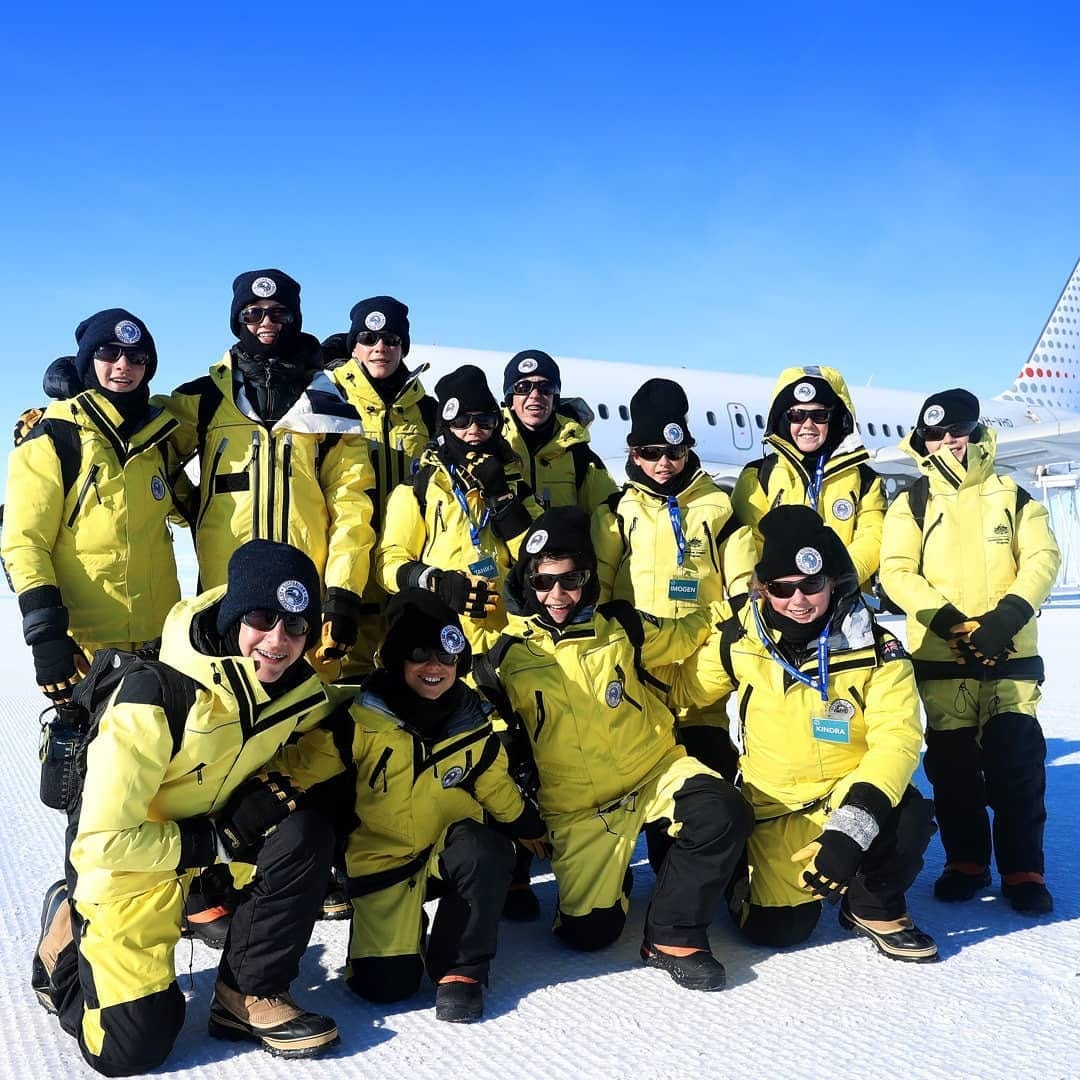
Photo supplied: Phoenix Robey
“It was clear, clear blue sky, it was a great day. It was a pretty big aeroplane. I don’t know if you’ve seen any photos from how they do it, but they land on an ice runway. So the runway’s just made of ice and you have this huge Boeing 747 or something just landing down on ice. And then you step down the steps and everywhere is just white. It’s just ice, just snow everywhere. Nothing else. It was pretty crazy to see. Surreal.
“I think it was -10 and the wind chill factor maybe -15. But that was considered summer. That was very warm for that day. Usually it’s -70 or something. So yeah, but I think I think Melbourne and Tassie probably felt colder.”
They had the full tourist experience in Antarctica. Checking out the local industry, the suburbs and partaking in the activities Antarcticans do for fun.
“We got a few tours of the science departments down there and where people are living and had a snowball fight and stuff.”
Robey and his cohort were rockstars returning back to school after making the day trip down south.
“It was a school day. And I think we got back as school was kind of ending at the end of the day. Everyone was asking how it was and just couldn’t believe that we went down there.”
They were atop the Taswegian bulletin for their history making feat. Holding that flag was somewhat a returning of the favour from Robey, who credits a lot of the people and places in Tasmania for his development.
“Anthony Stewart who used to coach the Hobart Chargers. He’s been very big in the development of my age group down here throughout the years. Very fortunate to have you know I have him and my dad’s also you know coach that’s been coaching me personally for a while. So very fortunate for those people.”
Stewart and the Chargers provided a source of motivation before Tasmania entered the NBL and are now entering the WNBL. There were countless positives to being part of the Tassie pipeline that still pair well with Robey’s work ethic and playstyle today.
“I think the mental side is pretty neglected, I reckon, in sports. It’s gotten a lot better and I was fortunate enough to be in the program I was in Tasmania. It was a heavy focus on the mental side of it. So I love the drills I was doing in my junior year were these drills that work on your mental side. So I’ve been doing it for quite a while.”
There was a huge chunk of his juniors when there were no Tasmania JackJumpers or Tasmania Jewels, so kids had to look elsewhere for motivation.
“There’s definitely people in NBL1 and Chargers. There were a few locals that everyone aspired to and liked to, you know, wanted to be like them one day. Tanner Krebs is a guy from Hobart who grew up here and he’s getting great success everywhere. So it’s always good to see that, see how he did it.”
There were individuals who told this story that young Tasmanians could try and emulate, but when the JackJumpers joined this NBL, it changed the game.
“I think before that there wasn’t anything to aspire to for all of us, me, including all the other juniors there was no real pathway, I guess, for where to go. But now, you know, JackJumpers are here, the Jewels are here. I think it’s definitely an aspiration for everyone. And there’s now a pathway that’s going to start to get there. So it’s great for everyone here and definitely something that I aspire to in the future.”
Robey then took a wide lens at his future as a whole.
“I have one more year in Taiwan. I want to keep seeing the world keep travelling so Europe is probably my next sights, wanting to try and start the step ladder path ladder over there. And then obviously, you know, NBL. Playing for my state is something big.”
Phoenix Robey’s basketball career is just getting started. His focus on understanding the foundation of any skill bodes well in basketball. Mix this with his obsession to perfect fundamentals and it seems as though he’s setting himself up for sustainable, long term success. He’s taking a path that has yet to be beaten so it’s hard to make assumptions on where he ends. You can’t point to anyone else, so you have to point back at Phoenix; excellence is routinely the outcome for him.
Whether he ends up in a EuroLeague team or the NBL, your best investment is to bet on Robey.
Follow Phoenix Robey on Instagram (@phoenixrobey) and the 臺藝大鯊魚籃球隊 NTUA Sharks on Instagram (@ntuasharksofficial).