
From court to celluloid: Lauren Jackson on the Capitals documentary, Go Big
The Opals great has added 'executive producer' to her already lengthy list of achievements

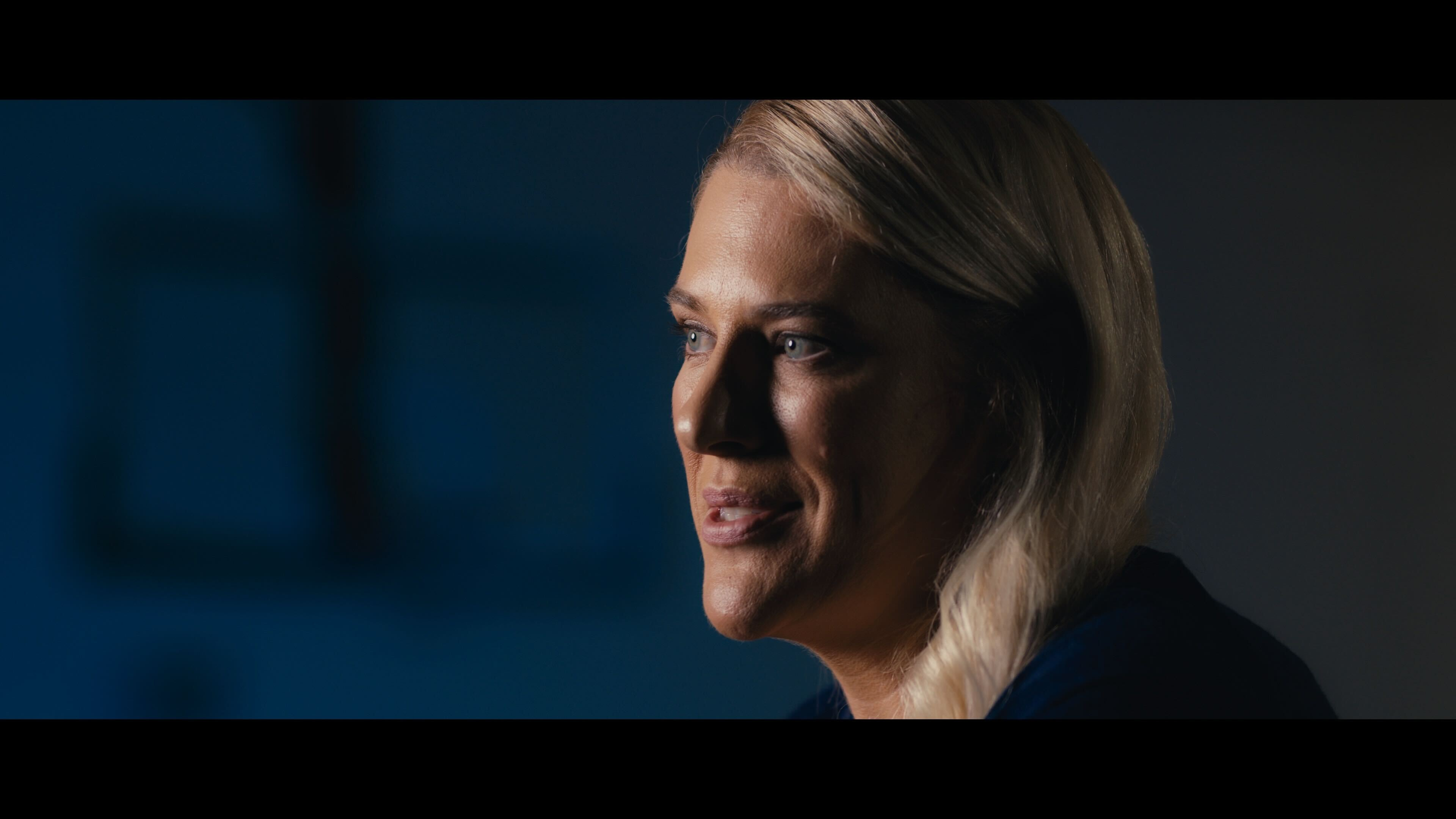
Lauren Jackson is in the middle of telling me about Go Big: The Story of the Canberra Capitals, a documentary that tracks the team’s quest for a three-peat in the WNBL20 season while fleshing out the broader history of the franchise, and the culture that has driven their remarkable success. But someone is intent on interrupting.
“My dog is trying to weasel his way onto the couch,” Jackson laughs. Turns out that even if you’re Australia’s greatest ever basketballer, your pets are still going to do as they please.
With her dog temporarily exiled to his mat, she sets out how the film, which is about to come to streaming service DocPlay, came to be: “Well, Lachie (Ross, the film’s director) had been a fan of the Capitals for many years, since he was a youngster. When they presented the idea to us, I thought: ‘Wow, that’s amazing – of course I would want to be part of telling that story’.”
Jackson came on board as executive producer and says her role involved giving high-level guidance to the filmmakers. “I was providing insights, some of which were me talking [in the documentary], but more just checking over it. They had a vision for it that was pretty spot on, and there was involvement from a lot of players. I didn’t do too much from a hands-on perspective, but I thought it told our story pretty accurately.”
Go Big… captures a WNBL season like no other, when the entire league relocated to Far North Queensland for a shortened championship in the midst of ongoing COVID lockdowns.
“It was really crazy, and a highly emotional time for a lot of people,” Jackson says. “Our society now talks about it as a really testing time for mental health. The athletes were locked up during a time when they needed to be training, the Olympics were being pushed back; there was so much going on. That makes the behind-the-scenes stuff pretty intense. It always is during a season when there’s a lot on the line, like there was for the Caps then, but it was like a pressure bubble.”

Still from Go Big: The Story of The Canberra Capitals/Supplied: DocPlay
Back in 2020, Jackson was working as Head of the WNBL. She says there was immense pressure on the league’s administrators to keep the competition alive amidst the global pandemic.
“The league had been running so long, and we didn’t want to let the clubs, players, fans or anyone in the basketball community down. But you don’t know what’s going to happen or what you have to look forward to, so it was weird.
“We were really fortunate to get the support of FNQ and the Queensland government, but we just didn’t know how it was going to play out. We had to operate on our feet because nothing was ever set in stone, and we didn’t ever know what was going to happen tomorrow. It was a real learning curve for me, just being part of that. From my perspective, Basketball Australia did an incredible job to make sure [the season] went ahead for players. There was a lot of work done between BA and the players’ association to make sure it was viable for the players. There were just so many concerns. But I feel like we got it done, and I’m sure the girls will remember that season for the rest of their lives just like I will.”
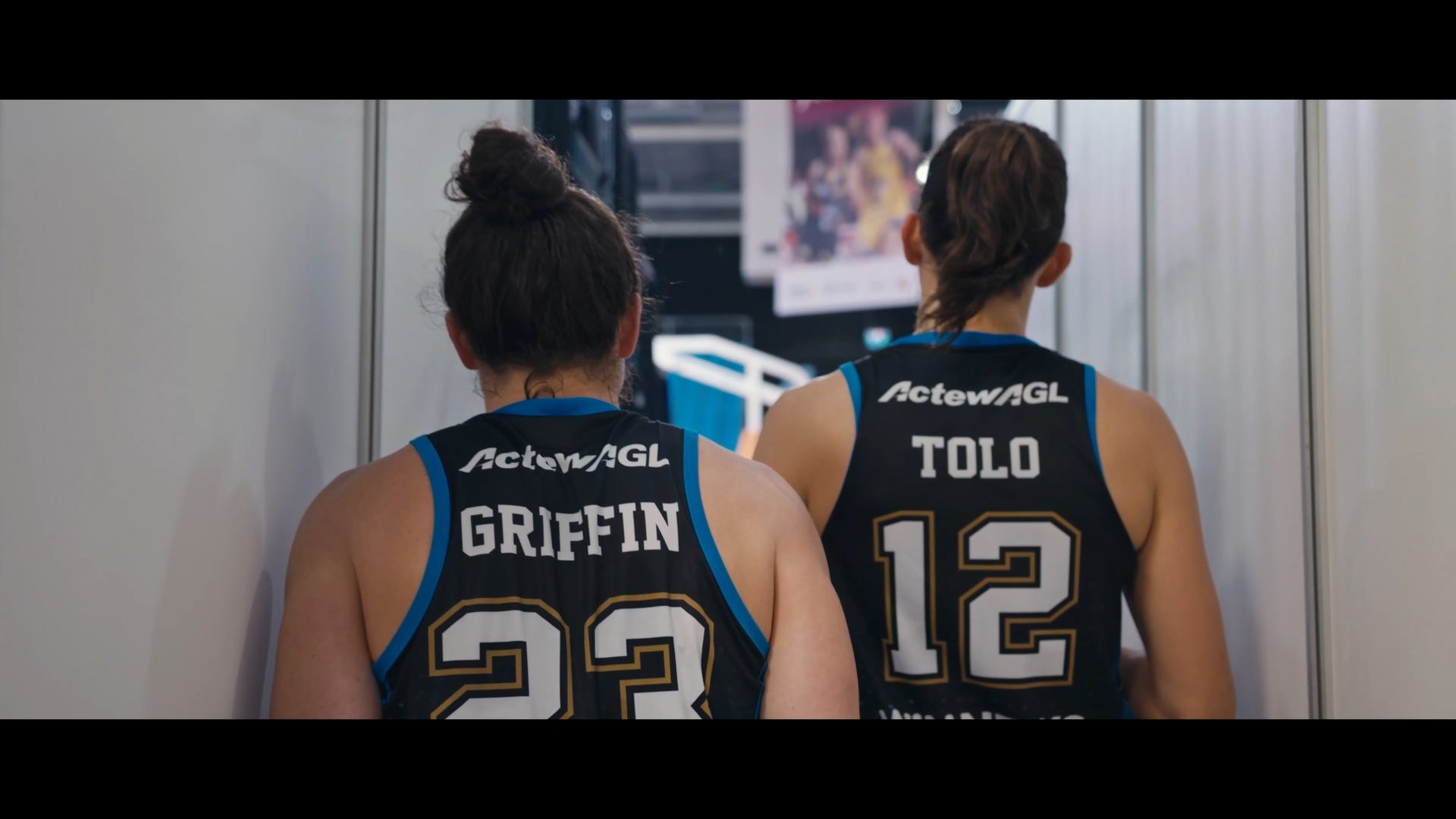
Still from Go Big: The Story of The Canberra Capitals/Supplied: DocPlay
As the documentary tracks the progress of the team through the regular season, interviews with two of the team’s star players and culture setters, Marianna Tolo and Kelsey Griffin, outline the challenges involved in chasing a three-peat, while fly-on-the-wall footage of team meetings gives insights into how a successful team define and reinforce their core values. The film also serves as a time capsule of Jade Melbourne’s remarkable debut season; she buzzes with wide-eyed enthusiasm whenever she’s on screen.
The access in Go Big… is a feature throughout, giving us raw footage of coach Paul Goriss emotionally exhorting the players not to leave anything on the court. Later, when the Boomers eliminate the Capitals in an elimination game, we watch as both players and coaches shed tears. Finally, we see Goriss, proud of the team’s effort, but gutted by the result, quietly taking down the posters the group had stuck up around the dressing room to articulate their goals. Jackson says it was vital to capture compelling human stories at a time when the league was returning to ABC TV.
“I can’t imagine it was easy getting that agreement,” Jackson says of the behind-the-scenes access. “But there was a lot of pressure on the WNBL to lift and get the players back on screens because there hadn’t been a lot of visibility or representation for some time. Doing the filming and everything during that period would have been a lot. It feels so long ago, but it really wasn’t; it was just a wild time.”
The other narrative in Go Big is how the Capitals developed their winning culture on their way to a league-best nine WNBL championships. Arguably, no one was more influential on this front than Carrie Graf, who was at the helm for six of the team’s winning years.
Jackson remembers Graf as a “hard but fair” coach. “She demanded that we go out there and give a hundred per cent at every training. There were never any days off. I have memories of doing shooting drills where she would make us run the ball down on misses. She demanded that level, like: ‘If you’re going to play this way, you have to practice this way’. I also played under Phil Brown, who was similar; he was very fair but very tough as well. They definitely shaped my mentality as an athlete. I was so competitive, but there were times when I took a second off, and they would be on me. They never relaxed. The thing I remember about Graffy is that she always pushed us to be the very best we could be all the time. It was hard, but it was good.”
Beyond her belief in unrelenting hard work, the film also illustrates how Graf was a hugely ambitious and socially progressive coach. She had a vision of a professional women’s league with full-time players and put in the hours making connections with the media, sponsors and the community to work towards this goal. Graf also believed that the team should facilitate players who were mothers, illustrated here by the story of Tracey Beatty, who would bring her young son (Bowyn Beatty, now a Junior at La Salle University) to training. Beatty repaid the club’s support handsomely, winning the Grand Final MVP in 2007.
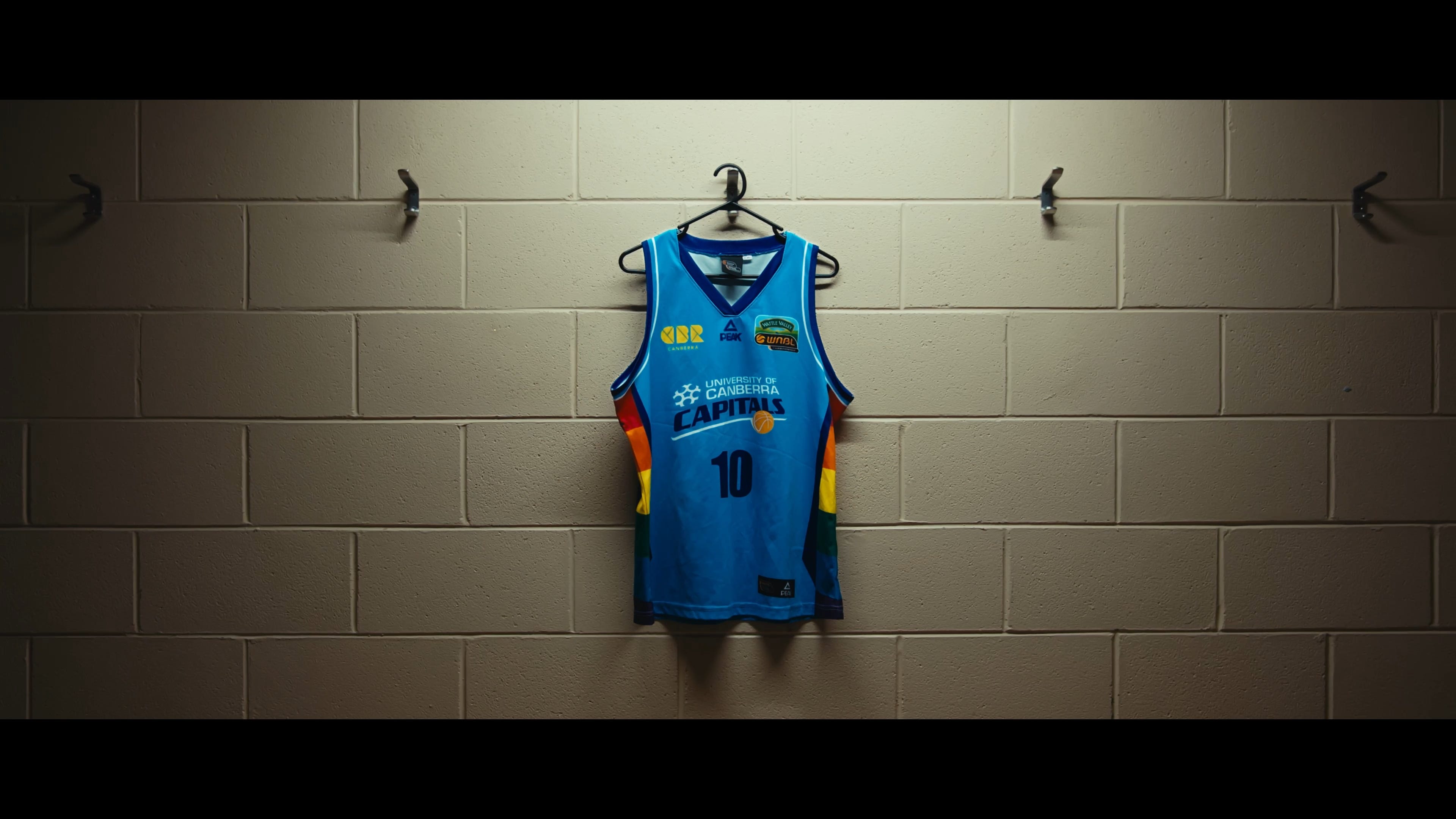
Still from Go Big: The Story of The Canberra Capitals/Supplied: DocPlay
The trailblazing decision to wear rainbow jerseys for the entire 2015/16 season to show support for the LGBT+ community was particularly close to Graf’s heart. In one of the documentary’s most striking moments, she breaks down when recalling what the gesture meant to young people who had felt alienated from the sporting world.
Go Big… also features some candid reflections from Jackson on her disappointment at the injuries she faced after signing an unheard-of million-dollar deal to play with the team back in 2011, and the challenges around chronic pain, anxiety and depression she faced after her first retirement.
“In those days, we didn’t even talk about that stuff,” Jackson reflects. “But it was a breath of fresh air to finish and finally be able to talk about it. Now, it’s definitely become front and centre, the wellness piece. We consider professional athletes through a more holistic lens, their mental health as well as their physical health. Before, the approach was more like ‘We’ll get you on the court, but we don’t really talk about that stuff’.
“When I was younger and playing, I definitely did struggle with a lot of injuries, and it ended my career that first time, but being an athlete, with the good comes the bad. In hindsight, would I have changed some things? Absolutely. But would I be the same person I am today? Probably not.”
These days, Jackson works as a special advisor to the WNBL and says it’s been exciting to be involved in a new era for the league, including new ownership and the announcement of a new Tasmanian franchise. But she also sees value in looking back to where the league has been to imagine where it could go next.
“A lot of stuff in [the film] is still applicable today,” she says. “There is a lot of nostalgia, particularly from the older players, but also pride. For people like me and my best friend, Kristen Veal, we went through a lot together and grew up at that club. It was a fantastic environment that shaped us as athletes and people.”
“There’s a lot that I’m proud of from my time with the Capitals. It was a really incredible time for women’s sport in this country, just right before it really exploded. From that perspective, it was a great story to tell.”
Go Big: The Story of the Canberra Capitals is available on DocPlay from September 25